When organizing a wedding, you plan the event for a specific number of guests—and you know that if someone doesn't show up, two things happen at once: the money invested in that empty seat "vanishes" (once the catering is booked, it’s paid for, regardless of whether the guest attends), and you miss the chance to have invited another loved one in their place. In short: an empty chair means a double blow—to both your budget and your heart.
The good news is that you can drastically reduce this risk with a little organization—and, as a bonus, cut down on the anxiety of constantly checking WhatsApp to ask, "So, are you coming or not?"
Creating a guest list is a task that requires time, caution, and sometimes a good dose of diplomacy. On an emotional level, you might want to invite everyone who has ever crossed your path—from the cousin you haven't seen since high school to the coworker you only say hello to in the hallway. But the rational side (the one that keeps an eye on the budget) knows you can only invite a certain number of people.
At this stage, it is essential to agree with your partner on how many people each of you will invite—a common split is 50/50, but the important thing is to reach an agreement beforehand so it doesn't become a source of conflict later.
Ideally, prioritize the people who matter most to you: cherished family members, close friends, and those who have been there for the moments that truly count.
And here’s a classic trap: these people likely have a plus-one (boyfriend, girlfriend, spouse, child) who also needs to be invited—and that’s how a list of 80 names turns into a list of 130 almost without you realizing it.
A helpful tip: prioritize the must-have guests first and put them on a separate list—this will serve as the foundation for everything that follows.
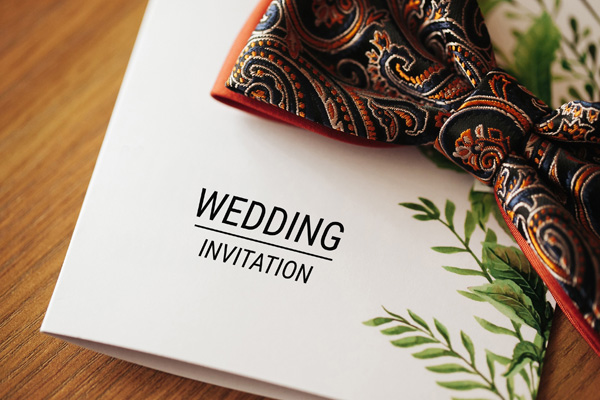
Once you’ve decided who will be there, it’s time to create an invitation that signals just how special the event will be. If you’re going with printed invitations, it’s worth investing in heavier paper stock (300g coated paper, for example, is a classic choice that feels high-quality the moment you hold it). If you opt for digital invitations—which are becoming increasingly common, partly because they are more sustainable and cost-effective—make sure the visuals shine: an elegant design that looks great on both mobile phones and computers, featuring a touch of motion (like a subtle animation of falling flowers), tends to generate far more engagement than a static image.
As the wedding date approaches—about six months prior is a good starting point—send your guests an initial confirmation message, asking them to let you know whether or not they can attend. It is worth explaining—kindly—that this initial confirmation is important because you are organizing every detail of the event (catering, wedding favors, table layouts) and need these numbers to make accurate decisions.
This is exactly where DisseSim becomes a fantastic ally: the platform features an RSVP tool that greatly simplifies communication. You receive responses in real-time, directly on an organized dashboard, without having to track individual WhatsApp messages or hope no one forgot to reply in the family group chat.
When there are about three months left until the big day, ask your guests to confirm again. Because this second round happens closer to the event date, the responses tend to be much more reliable—after all, travel plans are set, work schedules are arranged, and last-minute surprises are far less likely. This is the stage where the accuracy of your RSVP list really skyrockets.
Throughout this process, a simple (and fun) strategy to keep guests engaged is to post countdown updates on social media or in your wedding group chat. Phrases like "90 days until our wedding and the groom still hasn't picked his suit" or "30 days until our big day and the bride is already getting excited" make guests smile, comment, and—most importantly—remember to RSVP as soon as possible.
If you want to go beyond the classic examples, here are a few extra suggestions for different countdown milestones:
The secret to these posts is mixing the countdown, humor, and a bit of the couple's genuine vulnerability—guests love following this journey closely, and each post serves as another gentle (and fun) reminder to RSVP as soon as possible.
Here’s a stress-free tip that often saves the budget:
It isn't polite to invite anyone at the last minute. If you are planning a wedding for 100 people but your list of "loved ones" has reached 140 names, the right approach is to invite the 100 most important people first—and, as soon as someone declines, invite the next person on the waiting list. This way, no one feels like a "second-class guest," and you keep your guest count close to the ideal without overspending or leaving empty seats.
Here is a summary of the step-by-step process:
By following these steps, your chances of having virtually all your guests confirmed—and actually present on the big day—increase significantly.
Managing RSVPs manually—spreadsheet by spreadsheet, message by message—is one of the tasks that consumes the most time (and patience) for the couple. That is exactly why DisseSim exists: beyond connecting you with the best vendors for your big day, the platform offers a simple, straightforward RSVP system so you can keep track of responses in real time—without relying on screenshots of conversations or playing a game of telephone.
How about simplifying this crucial part of the planning process? Check out DisseSim’s features and organize your wedding RSVPs with much greater peace of mind.
The information in this article is for informational purposes only and may vary based on region, vendor, time of year, and other wedding-specific factors. We always recommend confirming details directly with service providers before making any decisions. At DisseSim, you can find vendors, compare quotes, get answers to your questions, and plan your wedding with confidence. Browse available vendors.
